
One of the most common questions people ask when ordering a sign is:
“What material should I use?”
The answer depends on more than the design itself. Where the sign will be displayed, how long it needs to last, weather exposure, installation requirements, and budget all influence which material is the best fit.
Here’s a guide to some of the most common sign materials and when they’re typically used.
Acrylic: Clean, Professional & Premium
Acrylic signs are often chosen when appearance is a top priority.
With a smooth surface and polished appearance, acrylic creates a modern, professional look that’s popular in offices, healthcare facilities, retail environments, and corporate spaces.
Common Uses
Lobby signs
Office directories
Room identification signs
Reception area branding
Interior wayfinding
Retail displays
Why Businesses Choose Acrylic
Premium appearance
Crisp print quality
Modern aesthetic
Available in various thicknesses
Can be mounted with standoffs for added dimension
Best For
Interior environments where presentation and brand image matter most.
Vinyl: Flexible, Versatile & Highly Adaptable
Vinyl is one of the most versatile materials in the signage industry.
It can be applied to walls, windows, floors, vehicles, banners, and many other surfaces, making it a popular solution for both temporary and long-term applications.
Common Uses
Window graphics
Wall graphics
Floor graphics
Vehicle graphics
Promotional signage
Storefront displays
Why Businesses Choose Vinyl
Extremely versatile
Works on many surfaces
Available in temporary and permanent options
Easy to customize
Suitable for both indoor and outdoor applications
Best For
Businesses looking for flexible graphic solutions that can be applied directly to existing surfaces.
Mesh: Built for Wind & Large Outdoor Displays
Mesh material looks similar to a traditional banner but contains tiny perforations that allow wind to pass through.
This reduces stress on the material and mounting hardware, making mesh an excellent choice for large outdoor installations.
Common Uses
Construction fencing
Event fencing
Building wraps
Stadium graphics
Outdoor event signage
Large-scale promotional displays
Why Businesses Choose Mesh
Wind-resistant design
Lightweight
Durable outdoors
Excellent for oversized graphics
Helps reduce tearing in windy conditions
Best For
Large outdoor graphics exposed to wind and weather.
Aluminum: Durable, Weather-Resistant & Long Lasting
When longevity is the priority, aluminum is often the material of choice.
Aluminum signs are lightweight, durable, and resistant to rust, making them ideal for permanent outdoor applications.
Common Uses
Parking signs
Property signs
Regulatory signs
Directional signs
Building signage
Safety signs
Why Businesses Choose Aluminum
Excellent outdoor durability
Rust-resistant
Lightweight yet strong
Long lifespan
Professional appearance
Best For
Permanent outdoor signage that needs to withstand years of weather exposure.
Coroplast: Lightweight & Budget Friendly
Coroplast is a corrugated plastic material commonly used for temporary outdoor signage.
It’s lightweight, affordable, and easy to install, making it one of the most popular materials for short-term campaigns and promotions.
Common Uses
Yard signs
Political campaign signs
Event signage
Construction signs
Real estate signs
Directional signs
Why Businesses Choose Coroplast
Cost-effective
Lightweight
Easy to transport
Suitable for short-term outdoor use
Quick production turnaround
Best For
Temporary outdoor signs where affordability and flexibility are important.
How to Choose the Right Material
If you’re unsure which material is right for your project, start by asking four questions:
Where will the sign be displayed?
Indoor and outdoor environments often require very different materials.
How long will the sign be used?
A temporary event sign may need a different solution than a permanent building sign.
How important is appearance?
Premium interior displays often prioritize aesthetics, while construction signs may prioritize durability and cost.
What conditions will the sign face?
Wind, sunlight, moisture, temperature fluctuations, and traffic all influence material selection.
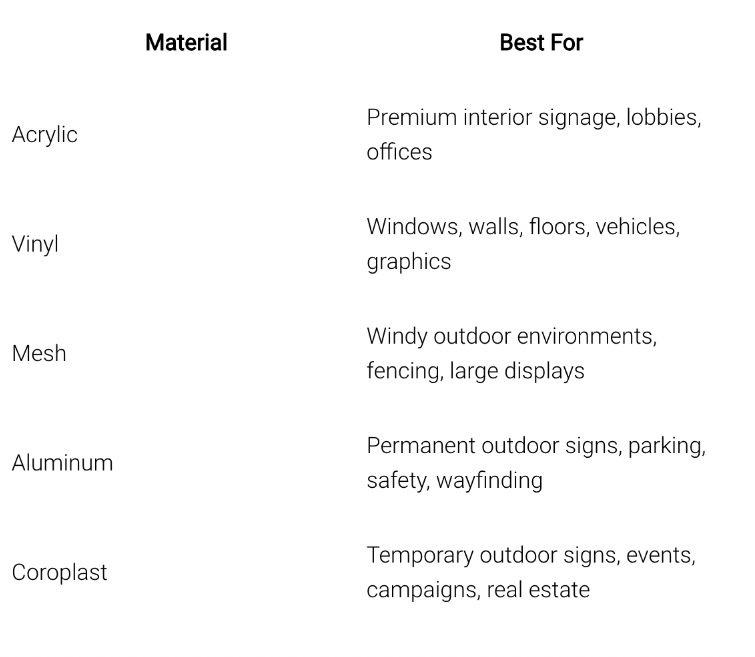
Quick Reference Guide
The Bottom Line
There’s no single “best” sign material, only the material that’s best for your specific project.
Acrylic offers a premium appearance. Vinyl provides flexibility. Mesh handles wind. Aluminum delivers long-term durability. Coroplast provides an affordable solution for temporary signage.
If you’re unsure which material is right for your application, our team can help evaluate your goals, environment, budget, and installation requirements to recommend a solution designed to perform.